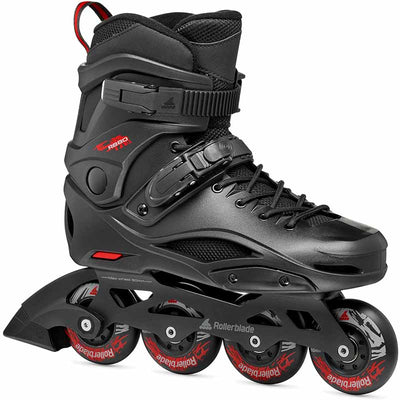
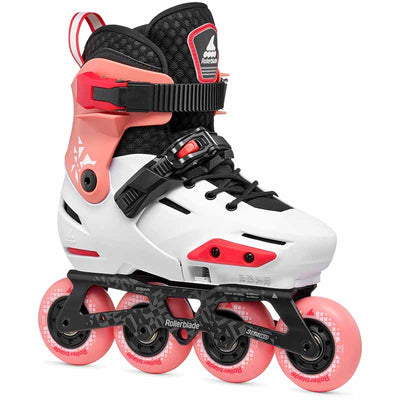
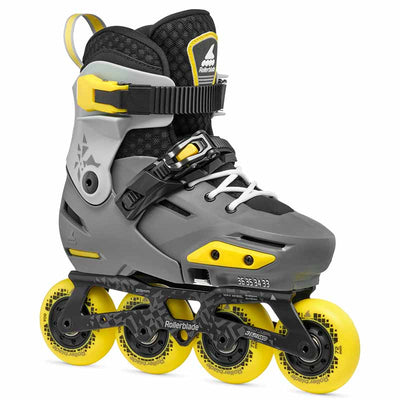
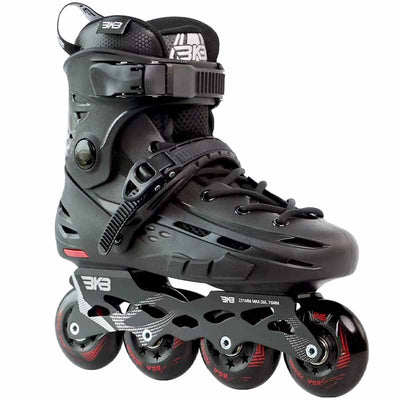
Hey Inlinex family! It's your friendly inline skating expert here, ready to dive deep into one of the most common questions we get: "Which inline skate wheel size is right for me?" Whether you're eyeing your first pair of skates or looking to upgrade, understanding the nuances between 80mm, 100mm, and 110mm wheels is key to unlocking your best skating experience.
The Core Dilemma: Understanding Inline Skate Wheel Size Basics

Before we break down the specific sizes, let's quickly cover what those numbers mean and why they matter. The numbers like 80mm, 100mm, or 110mm refer to the diameter of the wheel in millimeters.
What Do Those Numbers Mean?
Simply put, wheel diameter is the measurement across the wheel. It's a critical factor because it directly influences three main aspects of your skating: speed, agility, and comfort.
The Golden Rule: Bigger Wheels = Faster, Smaller Wheels = More Agile
Generally speaking, larger wheels provide higher top speeds, better roll over obstacles, and more comfort over rough surfaces, but they sacrifice some agility and acceleration. Conversely, smaller wheels offer greater agility, a lower center of gravity, and quicker acceleration, but lower top speed and less vibration absorption.
Diving Deep: 80mm Wheels – The Agile All-Rounders

The 80mm wheel is often considered the standard or "normal" wheel size for inline skating, especially for those just starting out. If you're looking for maximum control and responsiveness, these are your go-to.
Who Are 80mm Wheels Best For?
- Beginners: The lower center of gravity provides enhanced stability, boosting confidence for new skaters. They are easier to control at slower speeds and quicker to respond when turning or stopping.
- Urban & Freeskating: Excellent for navigating crowded city streets, making sharp turns, and performing technical maneuvers. Skates like the FR FRX 80 are superb choices for urban skating due to their agility.
- Slalom & Hockey: The superior agility and quick acceleration make them ideal for these disciplines.
- Casual Cruisers: Great for leisurely skates in parks or short commutes where quick maneuvers are more important than top speed.
Pros of 80mm Wheels:
- Superior Agility & Control: Makes sharp turns, pivots, and rapid direction changes a breeze.
- Quick Acceleration: You'll get up to speed faster, which is great for stop-and-go skating.
- Enhanced Stability: Being closer to the ground provides a more stable platform, boosting confidence, especially for new skaters.
- Responsive: Great for technical skating and precise movements.
Cons of 80mm Wheels:
- Lower Top Speed: You'll have to work harder to maintain higher speeds compared to bigger wheels.
- Less Smooth Ride: More susceptible to feeling vibrations and bumps from rough surfaces.
- Faster Wear: Due to more revolutions per distance, they can wear down a bit quicker.
Inlinex Product Examples: Skates like the FR FRX 80 and Flying Eagle F5S often come equipped with 80mm wheels, making them superb choices for urban skating and those looking for maximum control.
Stepping Up: 100mm Wheels – The Speed & Stability Sweet Spot

Stepping up to 100mm wheels opens up a new world of speed and comfort without fully sacrificing agility. This size has become incredibly popular for fitness and longer-distance skating, offering a fantastic compromise.
Who Are 100mm Wheels Best For?
- Intermediate Skaters: Those who have mastered the basics and are looking to increase their speed and efficiency without sacrificing too much control.
- Fitness Skaters: Ideal for longer workouts, commuting, and covering more ground with less effort.
- Urban Commuters: They offer a smoother roll over varied city terrain than 80mm wheels, making your commute more comfortable.
- Skaters Seeking Balance: If you want a skate that can do a bit of everything – good speed for distance, but still manageable for navigating turns – 100mm is a strong contender.
Pros of 100mm Wheels:
- Good Balance of Speed & Agility: Faster than 80mm but still maneuverable enough for most urban environments.
- Improved Roll & Glide: You cover more distance with each push.
- Increased Comfort: Better at absorbing road vibrations than smaller wheels, making longer skates more enjoyable.
- Versatile: A great all-around choice for many skating styles once you're comfortable.
Cons of 100mm Wheels:
- Less Agile than 80mm: You'll notice a slight reduction in quick turning compared to smaller wheels.
- Higher Center of Gravity: Slightly less stable than 80mm, which might require a bit more balance.
- Slightly Slower Acceleration: Takes a little more effort to get up to top speed compared to 80mm.
Inlinex Product Examples: Many Rollerblade Macroblade models come with 100mm wheels, offering excellent performance for fitness and recreational speed. The Powerslide Next series also offers configurations with 100mm wheels, providing a robust option for urban cruising and distance.
The Big Guns: 110mm Wheels – Built for Speed and Distance

For those who crave speed and efficiency over long distances, 110mm wheels are the way to go. These "big wheels" are designed to roll fast and maintain momentum with minimal effort.
Who Are 110mm Wheels Best For?
- Advanced Skaters: Requires good balance, strong technique, and confidence due to the higher ride height.
- Fitness & Marathon Training: Excellent for long-distance sessions, marathons, and covering significant ground efficiently.
- Urban Commuting (Smooth Paths): If your commute involves long stretches of smooth pavement and fewer sharp turns, 110mm wheels can make it much faster.
- Speed Enthusiasts: For skaters who prioritize top speed and glide.
Pros of 110mm Wheels:
- Maximum Speed: Once you get them rolling, they maintain speed effortlessly.
- Superior Roll Over Obstacles: Smaller cracks, pebbles, and uneven surfaces are less of an issue, providing a smoother ride.
- Exceptional Comfort: Excellent vibration dampening for a smooth ride over long distances.
- Highly Efficient: Fewer pushes needed to cover more ground, saving energy on long skates.
Cons of 110mm Wheels:
- Significantly Higher Center of Gravity: Requires good balance and confidence.
- Reduced Agility: Making sharp turns or quick adjustments is much harder.
- Slower Acceleration: Takes more effort and space to get up to speed.
- Can Be Challenging for Beginners: Definitely not the best choice for learning to skate.
- Longer Frames: Often come with longer frames to accommodate the larger wheels, which further reduces agility.
Inlinex Product Examples: The Powerslide Next 110 and Rollerblade Macroblade 110 3WD are prime examples of skates designed to maximize speed and efficiency with 110mm wheels.
Beyond the Millimeters: Other Factors to Consider
While wheel size is crucial, it's not the only factor. To truly optimize your skating experience, let's look at a few other important considerations.
Wheel Hardness (Durometer - A)
Wheel hardness, measured on the Durometer A scale (e.g., 85A), affects grip, speed, and durability. Softer wheels (lower 'A' number, e.g., 78A-82A) offer more grip and shock absorption, ideal for rough surfaces or indoor skating. Harder wheels (higher 'A' number, e.g., 84A-88A) provide more speed and durability, great for smoother surfaces and lasting longer. Most outdoor fitness and urban skates use wheels in the 80A-88A range.
Wheel Profile (Shape)
The profile of your wheel refers to its cross-sectional shape:
- Rounded/Full Profile: Offers more grip and stability, great for general cruising and urban skating.
- Elliptical/Narrow Profile: Reduces contact with the ground, leading to less friction and more speed, favored by speed skaters and for long-distance.
Frame Length
The length of your skate's frame also plays a role. Longer frames provide more stability at speed but reduce agility. Shorter frames are more agile but can feel less stable at high speeds. Your wheel size choice is often limited by your frame's maximum wheel capacity.
Your Skating Style & Goals
Are you a casual cruiser, an urban explorer, a fitness fanatic, or a speed demon? Your personal goals should heavily influence your wheel choice. If you're focused on tricks and tight turns, smaller wheels are better. If you want to cover miles quickly, bigger wheels are your friend.
Your Skill Level
Beginners almost always benefit from smaller wheels (like 80mm or 84mm) due to the increased stability and control. As you progress, you can experiment with larger sizes to find your personal sweet spot. Unsure about your skill level or what skate is right for you? Take our Skate Quiz!
Common Questions Answered (FAQ Style)
What's the best wheel size for beginners?
For beginners, 80mm wheels are generally recommended. They offer the best balance of stability, control, and quick acceleration, making them easier to learn on and build confidence.
Can I mix wheel sizes on my skates?
Yes, but typically only within certain limits and for specific purposes. This is known as a "rockered" setup, where the middle wheels are slightly larger (e.g., 76mm-80mm-80mm-76mm) to enhance agility for freestyle slalom. However, for general fitness or urban skating, it's usually best to stick to uniform wheel sizes unless your frame is specifically designed for a rockered setup.
Do bigger wheels wear out faster?
While bigger wheels theoretically make fewer rotations over the same distance, the wear rate also depends on wheel hardness, skating style, and surface. Generally, softer wheels wear faster. However, smaller wheels often experience more frequent impacts and may wear down quicker overall due to increased revolutions.
How do I know what size wheels my skates can take?
Your skate frame will have a maximum wheel size indicated (e.g., "Max 80mm" or "Max 110mm"). Always check your frame for this specification before buying new wheels.
Have more questions? See all FAQ.
Finding Your Perfect Roll at Inlinex
Choosing the right wheel size is a personal journey that evolves with your skills and preferences. There's no single "best" size for everyone, but by understanding the characteristics of 80mm, 100mm, and 110mm wheels, you're now equipped to make an informed decision.
Remember, at Inlinex, we're not just selling skates; we're helping you find your perfect ride. Whether you're a seasoned pro or just lacing up for the first time, our expert team is here to guide you.
Ready to experience the difference the right wheels can make? Explore our extensive range of inline skates and wheels today!